Legal Risks in Mobile App Development: A Complete Guide for Developers
Whether you’re a seasoned mobile app developer launching your next big project or a newcomer to the app development world, one critical question should always be on your mind: “What legal risks am I facing, and how can I protect myself?”
Over the years, app developers and entrepreneurs have learned that success isn’t just about creating a great user experience – it’s about navigating the complex legal landscape that comes with mobile app development. From intellectual property disputes to data privacy violations, the legal risks can be devastating if not properly addressed.
Some developers choose to handle legal matters themselves, while others work with experienced legal professionals to ensure comprehensive protection. The key is understanding what risks exist and taking proactive steps to mitigate them.
In this article, we’ll explore the major legal risks in mobile app development and provide practical strategies for protecting your app, your business, and your users.
1. App Development Agreements
The foundation of any successful app development project is a comprehensive legal agreement. Whether you’re working with freelance developers, agencies, or internal teams, having the right contracts in place can mean the difference between a smooth launch and costly legal disputes.
1.1 Essential Contract Elements
A well-drafted app development agreement should include several critical components that protect both parties and establish clear expectations.
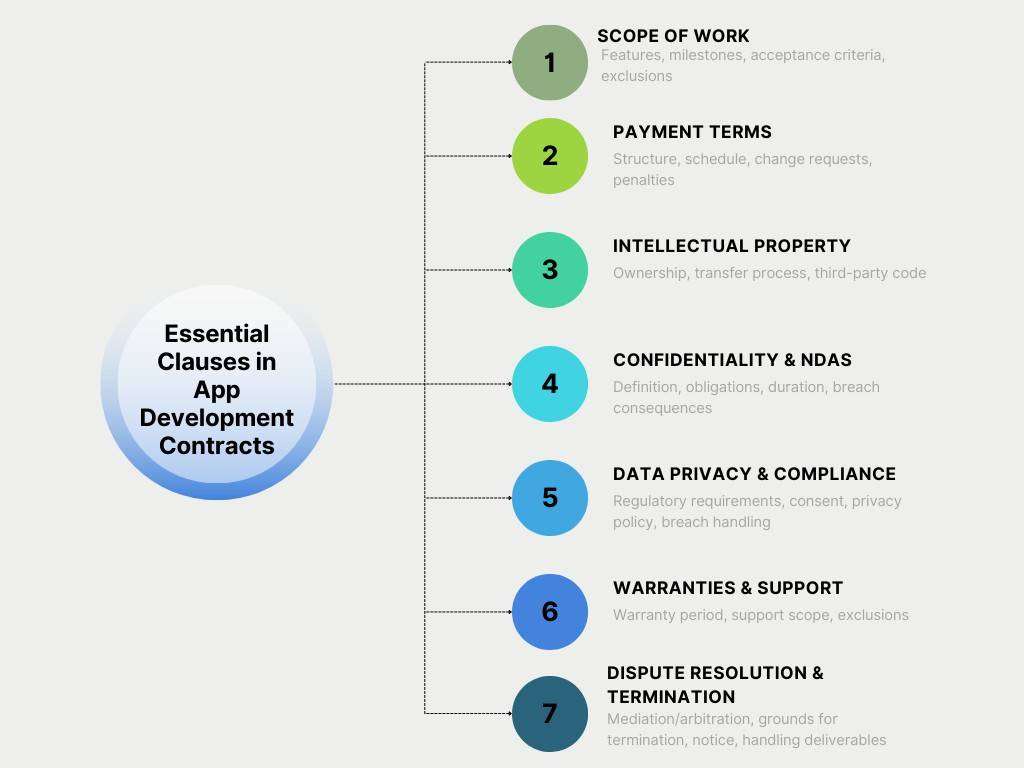
Scope of Work and Deliverables form the backbone of any development agreement. This section should detail exactly what will be built, including specific features, functionalities, and technical specifications. Vague descriptions like “a social media app” can lead to disputes when the final product doesn’t match expectations.
Milestones and Payment Terms help manage cash flow and project progress. Breaking the project into phases with specific deliverables and payment schedules protects both the client and developer. Each milestone should have clear acceptance criteria and deadlines.
Acceptance Testing Procedures outline how the app will be tested, who’s responsible for testing, and how bugs or issues will be reported and resolved. This prevents disputes over whether the app meets the agreed-upon specifications.
Change Management Process is crucial because app requirements almost always evolve during development. The agreement should specify how changes will be requested, approved, and priced, including any impact on timelines and budgets.
Maintenance and Support Terms define what happens after the app launches. Will the developer provide bug fixes? For how long? What about feature updates or compatibility with new operating system versions?
Termination Clauses protect both parties by outlining conditions under which the agreement can be ended and what happens to work product, payments, and ongoing obligations.
1.2 Pros and Cons of Detailed Agreements
Pros:
- Clear expectations reduce the likelihood of disputes and misunderstandings
- Detailed specifications help ensure the final product meets requirements
- Structured payment terms protect cash flow for both parties
- Comprehensive agreements demonstrate professionalism and build trust
Cons:
- Lengthy negotiation process can delay project start
- Overly detailed contracts may limit flexibility during development
- Complex agreements can be expensive to draft and review
Some developers may be deterred by extensive legal requirements
2. Intellectual Property Protection
Intellectual property disputes are among the most expensive and damaging legal risks in app development. Understanding how to protect your IP while respecting others’ rights is essential for long-term success.
2.1 Types of IP Rights
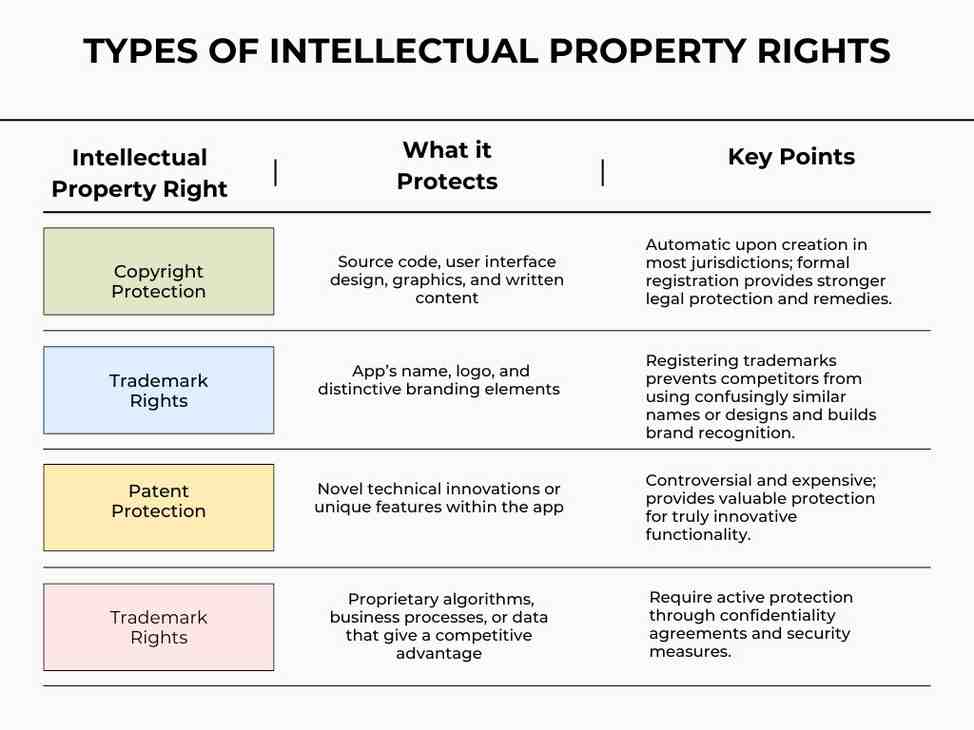
Copyright Protection covers the app’s source code, user interface design, graphics, and written content. In most jurisdictions, copyright protection is automatic upon creation, but formal registration provides stronger legal protection and remedies.
Trademark Rights protect your app’s name, logo, and distinctive branding elements. Registering trademarks prevents competitors from using confusingly similar names or designs and helps build brand recognition.
Patent Protection may apply to novel technical innovations or unique features within your app. While software patents are controversial and expensive to obtain, they can provide valuable protection for truly innovative functionality.
Trade Secrets include proprietary algorithms, business processes, or data that give your app a competitive advantage. Unlike other IP rights, trade secrets require active protection through confidentiality agreements and security measures.
2.2 Ownership vs. Licensing
One of the most critical decisions in app development is whether to assign full ownership rights or grant licenses for different IP components.
Assignment of Rights means the client receives complete ownership of the app and all related IP. This gives the client maximum control but may cost more upfront and limit the developer’s ability to reuse code or techniques.
Licensing Arrangements allow developers to retain ownership while granting specific usage rights to clients. This can be more cost-effective but may create ongoing obligations and restrictions on how the app can be used or modified.
Background vs. Foreground Rights distinguish between existing IP that developers bring to the project (background) and new IP created specifically for the app (foreground). These distinctions should be clearly defined to prevent future conflicts.
3. Data Privacy and Compliance
With the increasing focus on user privacy, data protection has become one of the most significant legal risks in app development. Violations can result in massive fines, lawsuits, and irreparable damage to your reputation.
3.1 Major Privacy Regulations
General Data Protection Regulation (GDPR) applies to any app processing personal data of EU residents, regardless of where the app developer is located. GDPR requires explicit consent for data collection, gives users extensive rights over their data, and imposes fines of up to 4% of annual global revenue.
California Consumer Privacy Act (CCPA) and its successor, the California Privacy Rights Act (CPRA), grant California residents rights to know what personal information is collected, delete their data, and opt out of data sales. These laws apply to businesses meeting certain thresholds for revenue or data processing.
Children’s Online Privacy Protection Act (COPPA) requires special protections for children under 13, including parental consent for data collection and restrictions on data sharing. Apps directed at children or knowingly collecting children’s data must comply with strict requirements.
Emerging State Laws across the United States are creating a patchwork of privacy regulations. Virginia, Colorado, Connecticut, and other states have enacted their own privacy laws, each with unique requirements and compliance deadlines.
3.1 Implementation Strategies
Privacy by Design means building privacy protections into your app from the ground up rather than adding them as an afterthought. This includes data minimization, purpose limitation, and security safeguards integrated into the app’s architecture.
Consent Management requires implementing robust systems for obtaining, recording, and managing user consent. This includes clear consent requests, easy withdrawal mechanisms, and documentation of consent decisions.
Data Mapping and Inventory involves cataloging what personal data your app collects, where it’s stored, how it’s processed, and who has access. This information is essential for privacy compliance and incident response.
User Rights Implementation means providing mechanisms for users to access, correct, delete, or port their personal data. These features must be easily accessible and functional across all app platforms.

4. App Store Compliance
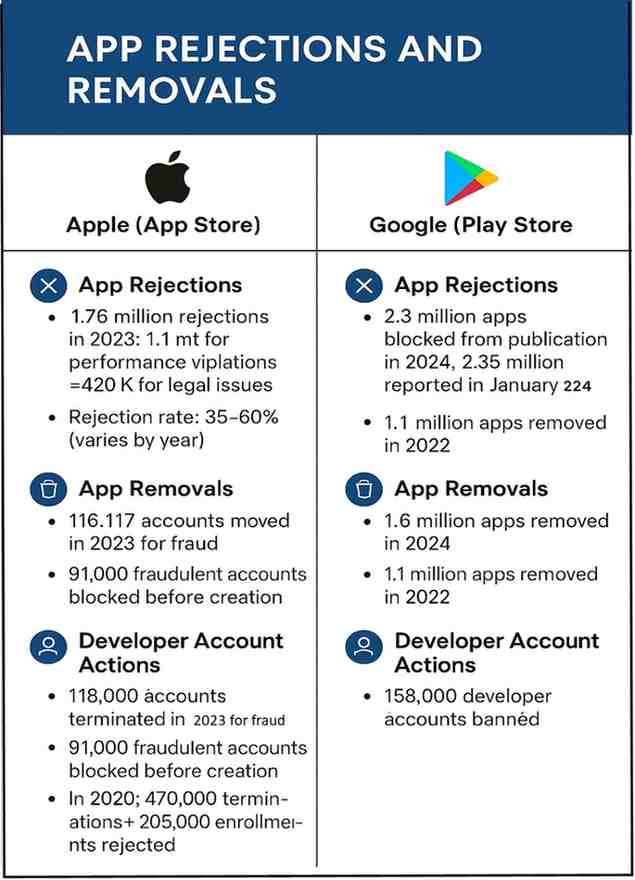
Both Apple’s App Store and Google Play have extensive guidelines that apps must follow to be accepted and remain available. Violations can result in app rejection, removal, or account suspension.
4.1 Platform-Specific Requirements
Apple App Store Guidelines cover content restrictions, design requirements, business model limitations, and technical standards. Apple is particularly strict about apps that duplicate existing functionality, contain objectionable content, or violate their payment processing requirements.
Google Play Policies address similar areas but with different emphasis and enforcement approaches. Google focuses heavily on user safety, harmful content, and compliance with local laws in different countries.
Content Restrictions vary between platforms but generally prohibit apps containing illegal content, hate speech, violence, or adult material (outside of designated categories). Medical and financial apps face additional scrutiny and requirements.
Monetization Rules limit how apps can generate revenue, particularly regarding in-app purchases, subscriptions, and advertising. Both platforms require use of their payment systems for digital goods and services.
4.2 Common Compliance Pitfalls
Inadequate Age Ratings can lead to app rejection or removal. Developers must accurately assess their app’s content and select appropriate age ratings based on platform guidelines.
Privacy Policy Violations occur when apps collect data not disclosed in their privacy policies or fail to implement required privacy protections. Both platforms now require privacy policies and conduct reviews for compliance.
Misleading Metadata includes inaccurate app descriptions, fake reviews, or misleading screenshots. Platforms increasingly use automated tools to detect and penalize these practices.
Third-Party SDK Issues can cause compliance problems if integrated software development kits violate platform policies or privacy requirements. Developers remain responsible for all components of their apps.
5. Third-Party Integration Risks
Modern apps rarely exist in isolation – they integrate with social media platforms, payment processors, analytics services, and other third-party tools. Each integration introduces potential legal risks.
Data Sharing Agreements with third-party services must be carefully reviewed to ensure they comply with privacy laws and don’t grant excessive rights to user data. Many popular SDKs have been found to collect more data than disclosed.
Service Level Agreements should address what happens when third-party services fail or change their terms. Apps dependent on external services can be severely impacted by outages or policy changes.
API Terms of Service often contain restrictions on how services can be used, data retention requirements, and termination conditions. Violating these terms can result in service suspension and legal action.
Liability Allocation becomes complex when multiple parties are involved in app functionality. Agreements should clearly define who is responsible for different types of failures or legal issues.
6. User-Generated Content and Liability
Apps that allow users to create, share, or interact with content face unique legal challenges around content moderation, liability, and platform responsibility.
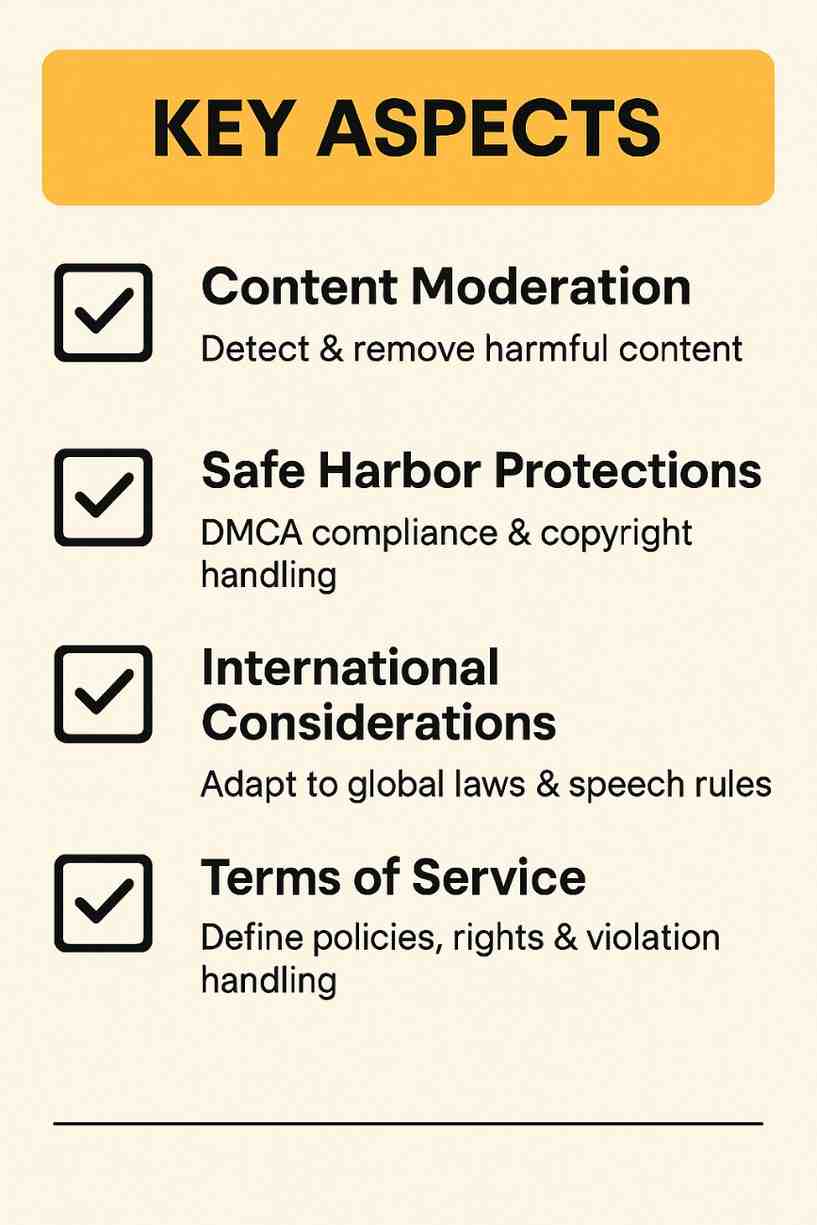
Content Moderation requires implementing systems to detect and remove illegal or harmful content. This includes copyright infringement, hate speech, harassment, and other policy violations.
Safe Harbor Protections under laws like the Digital Millennium Copyright Act (DMCA) provide some protection for platforms that properly handle copyright complaints and implement repeat infringer policies.
International Considerations become complex when apps serve global audiences subject to different laws regarding free speech, content restrictions, and platform liability.
Terms of Service must clearly define acceptable use policies, content ownership rights, and procedures for handling violations. These terms should be prominently displayed and regularly updated.
Conclusion
As you can see, legal risks in mobile app development are diverse and constantly evolving. The key is taking a proactive approach that addresses these risks from the beginning of your project rather than trying to fix problems after they arise.
Successful app developers understand that legal compliance isn’t just about avoiding lawsuits – it’s about building trust with users, protecting valuable intellectual property, and creating sustainable business models. By implementing proper agreements, protecting IP rights, ensuring privacy compliance, and staying current with platform requirements, you can focus on what you do best: creating amazing apps that users love.
The investment in proper legal protection may seem expensive upfront, but it’s minimal compared to the cost of legal disputes, regulatory fines, or having your app removed from major platforms. Start building legal protection into your development process today, and your future self will thank you.
Ready to protect your mobile app from costly legal risks and ensure bulletproof compliance? Book a 15-minute free consultation with an experienced app legal specialist to get a comprehensive risk assessment, explore IP protection strategies, and develop a legal compliance roadmap that covers everything from development agreements to privacy law implementation.